
· News · 13 min read
Hey Yo: The Counter-Attack Journey of Packaged Chicken Feet in Vietnam

Source: International Market Research Group – Tohigh
Publication Time: 15/08/2026 – 16:05
In Vietnam, a local brand established in 2018 applied the product logic of Chinese pickled chicken feet and rapidly transformed into a market leader in the ready-to-eat segment:
- 820,000 retail points of sale
- 8,200 chain supermarkets
- Two consecutive years in the Top 10 Leading Brands in Vietnam
That brand is Hey Yo.
Meanwhile in China, Youyou Foods (有友食品)—the pioneer of pickled chicken feet with annual revenue around 1.6 billion RMB and over 20% market share—is still evaluating the “right timing” to expand into Southeast Asia.
The master has not yet stepped abroad, but the student has already grown strong.
This stands as one of the most compelling case studies of market desynchronization between Chinese and Vietnamese snack industries.
I. Brand Profile: Who is Hey Yo?
| Category | Detailed Information |
|---|---|
| Brand Name | Hey Yo Foods |
| Parent Company | Toan Cau Food Co., Ltd |
| Established | 2018 |
| Headquarters | Duong Kinh District, Hai Phong, Vietnam |
| Factories | 2 major facilities in Hai Phong, capacity >400,000 cases/year |
| Core Categories | Ready-to-eat spicy chicken feet, Pento chicken feet, Bach Vi duck necks, beef jerky |
| Market Status | Pioneer and market leader in ready-to-eat chicken feet in Vietnam |
| Achievements | Top 10 Leading Brands in Vietnam in 2022 and 2023 |
Hey Yo positions itself as:
“The first ready-to-eat spicy chicken feet manufacturer in Vietnam.”
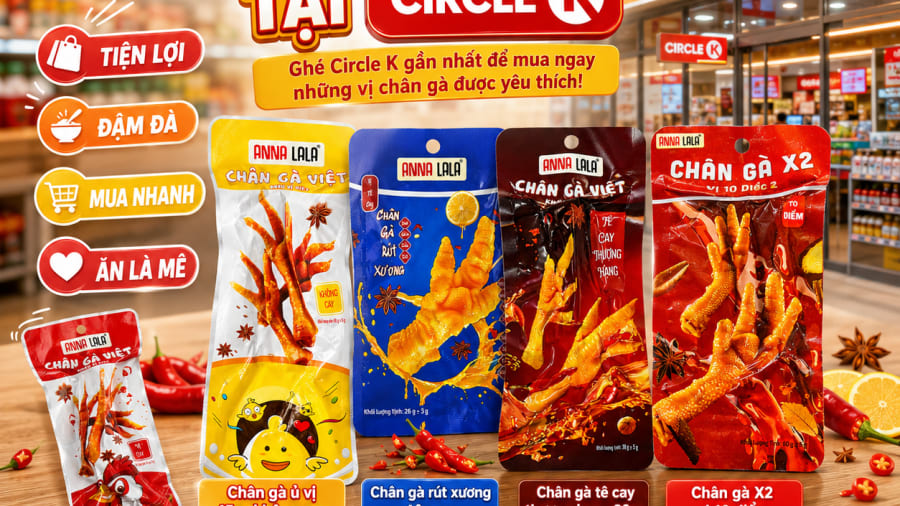
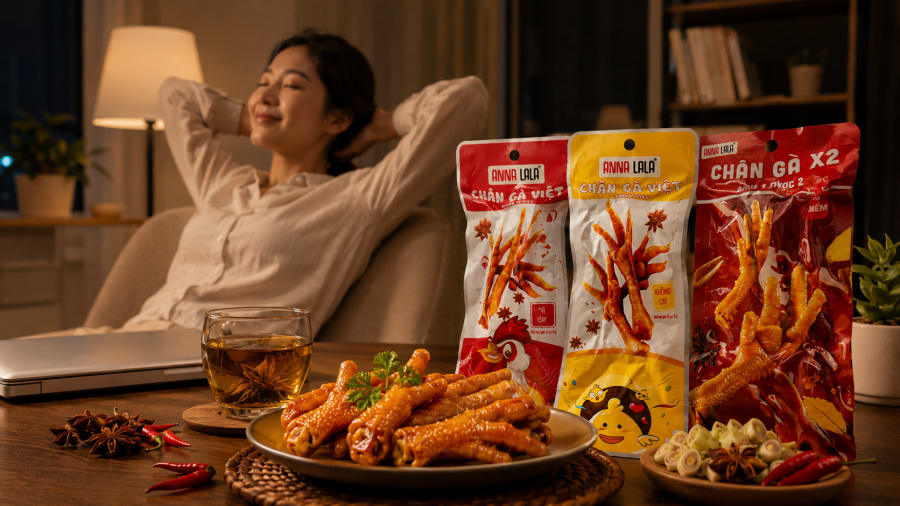
Prior to 2018, chicken feet consumption in Vietnam was mostly street food (boiled, pickled, or sauced). In other words, Vietnamese consumers natively loved chicken feet, but the product had not been packaged, branded, or turned into an industrial snack.
Hey Yo simply: vacuum-sealed this traditional street dish and placed it on retail shelves.
II. Category Analysis: Why Did Ready-to-Eat Chicken Feet Succeed in Vietnam?
2.1. Three Natural Category Advantages
- Pre-existing Taste Preference:
- Vietnam and many Southern/Southwestern regions of China share culinary cultural similarities.
- Eating chicken feet requires virtually zero market education.
- Vietnam already boasted traditional dishes like boiled, sour-spicy, or marinated chicken feet.
- Unlike Western markets where chicken feet might be viewed as offal or low-value parts, Vietnamese consumers face zero cognitive barriers.
- Format Vacuum:
- Having a way to eat something does not equal having a full-fledged product category.
- Prior to 2018, virtually no scalable packaged ready-to-eat chicken feet market existed on Vietnamese supermarket shelves.
- Meanwhile, street food faced natural limitations: unstable supply chains, difficult hygiene control, inconvenience for long-distance transit, and lack of quality standardization.
- Upgrading from street food to retail shelves represented the entire growth space of the category.
- Proven Business Model:
- China’s pickled chicken feet market proved this model was completely viable.
- In 2025, Youyou Foods generated approximately 1.6 billion RMB (chicken feet accounting for ~75%, with segment share exceeding 20%).
- China’s pickled chicken feet industry proved one thing: chicken feet could evolve from a side dish into a multi-billion RMB snack category.
- Hey Yo simply needed to walk this exact path in Vietnam.
2.2. Pricing Strategy: Anchoring to Beverages
In Vietnam, a 550ml bottle of mineral water typically retails for 5,000 – 10,000 VND. A pouch of Hey Yo chicken feet sits within that exact psychological price anchor.
| Comparison Product | Retail Price in Vietnam | Hey Yo’s Price Positioning |
|---|---|---|
| Bottled Water | 5,000 – 10,000 VND | Same mental range |
| Small Canned Beer/Soda | 10,000 – 15,000 VND | Slightly lower |
| Street Chicken Feet Portion | 20,000 – 40,000 VND | Significantly lower |
Crucial Insight:
Hey Yo does not price to compete with chips or crisps; they anchor to a bottle of water. This mental shift makes buying a pouch of chicken feet feel almost identical to buying a bottle of water. It stops being a deliberate snack purchase and becomes an effortless daily expense. If placed near the beverage section, natural sell-through can be even higher than in the snack aisle.
2.3. Chinese Formula, Vietnamese Taste
Product logic summarized in one sentence:
Use the technical processing framework of Chinese pickled chicken feet, but adapt it to Vietnamese palates.
| Flavor Name | Local Name | Taste Positioning | Net Weight | Equivalent Chinese Product |
|---|---|---|---|---|
| Bach Thao | Bách Thảo | Herbal, braised flavor; high market share in VN | 40g | Juewei Classic Style |
| Cung Dinh | Cung Đình | Boneless feet, “premium braised” positioning | 30g | Huangshanghuang Boneless Line |
| Nhat Tam | Nhất Tâm | Green pepper numbing-spicy | Standard | Sichuan/Chongqing Pickled Feet |
| Pickled Greens | Dưa Chua | Boneless feet paired with pickled mustard greens | 35g | Youyou Pickled Mustard Feet |
| Pento | — | Numbing pepper with 20+ herbs + ground pepper | Standard | Sichuan Numbing Pepper Style |
2.4. Three Notable Flavor Logics
Pickled Greens Flavor – Localized Chinese Pickled Feet:
This SKU carries the clearest “Chinese DNA” in Hey Yo’s lineup: 35g of boneless feet with pickled mustard greens. It directly evokes Youyou Foods’ iconic pickled mustard chicken feet. Pickled mustard greens are a deeply familiar dish on Vietnamese family dinner tables. Thus, Hey Yo used a familiar local flavor symbol to wrap a Chinese technical formula. This is a textbook example of: “Localizing the shell while keeping the formula’s soul.”Nhat Tam – Directly Mirroring Sichuan/Chongqing Palates:
Hey Yo does not hide learning from Chinese flavor profiles. Instead, they make it part of their taste origin story. In Vietnamese consumer perception: Sichuan/Chongqing = Authentic Spice. Thus, adopting this style acts as an origin endorsement.Pento – Proprietary “Numbing Herbal Pepper”:
Unlike Pickled Greens and Nhat Tam which mirror Chinese models, Pento represents a localized innovation: combining over 20 natural herbs with ground pepper.
SKU Matrix Construction Logic:
- 4–5 flavors: borrow proven Chinese flavor profiles to build baseline sales volume.
- 1–2 flavors: develop proprietary local flavors to create distinct differentiation.
- Remaining SKUs: expand variants (wild chili, double-feet packs) to maximize coverage.
2.5. “SKU Flooding” as a Shelf Dominance Strategy
- Maximizing Display Area: More SKUs mean more physical shelf space in small mom-and-pop stores, blocking competitors from entering.
- Low Trial Cost: Small 30–48g pouches at low price points encourage consumers to purchase multiple flavors at once, elevating cart value.
- All-Day Consumption Coverage: Sour flavor in the morning, numbing pepper at lunch, braised herbal at night—covering all daily snacking moments.
III. Channel Strategy: Penetrating 820,000 Outlets
Hey Yo’s ultimate moat is not its product, but its distribution system—a area where many foreign brands underestimate local execution.
3.1. Distribution System Expansion
| Timeline | Distributors | Retail POS (GT) | Supermarket Chains (MT) | Convenience Stores (CVS) |
|---|---|---|---|---|
| 2023 | 60+ | 100,000+ | 10,000+ | 1,500+ |
| 2025–2026 (Website) | — | 820,000+ | 8,200+ | 1,230+ |
In roughly two years, published retail points exploded from 100,000+ to 820,000+. Hey Yo penetrated traditional general trade deeply nationwide. In Vietnam’s FMCG landscape: whoever controls hundreds of thousands of mom-and-pop stores controls suburban, rural, and tier-2 markets.
3.2. Channel Tier Architecture
| Channel Tier | Representative Outlets | Strategic Role |
|---|---|---|
| Modern Trade | AEON, Bach Hoa Xanh, Co.opmart | Brand image building and price anchoring |
| Convenience Stores | 1,230+ stores | Capturing instant impulse demand |
| General Trade | 820,000 POS | The core revenue baseline |
| E-Commerce | Shopee Mall, TikTok Shop | Brand awareness + youth engagement |
| Exports | Shopee Singapore, Philippines | Southeast Asia market testing |
Execution sequence: Hey Yo built deep offline general trade (GT) roots first before expanding into modern trade and e-commerce. The reason is simple: packaged chicken feet are low-ticket, high-frequency, impulse items—their natural battleground is the physical counter shelf.
3.3. Supply Chain Choice: 100% Made in Vietnam
Hey Yo repeatedly highlights: “100% manufactured in Vietnamese factories.” This grants three distinct advantages:
- Cost Efficiency: Local chicken feet raw materials can be sourced directly. Domestic manufacturing cuts cross-border shipping, cold-chain expenses, import tariffs, and logistics overhead.
- Legal Compliance: Imported meat products face strict regulatory scrutiny. Domestic production drastically reduces import clearance complexity.
- Consumer Psychology: The “Made in Vietnam” label creates local trust and reduces hesitation surrounding imported frozen meats.
Thus, Hey Yo negated the cost and operational advantages of imported Chinese chicken feet. While Chinese brands were still calculating tariffs and clearance paperwork, Hey Yo’s domestic production line was already stocking township shelves.
IV. Relationship with Youyou Foods: A 1.6 Billion RMB Lesson
This is the most provocative aspect of the story: Hey Yo and Youyou Foods share no ownership, OEM, or corporate affiliation. Yet between them lies a case of category inheritance coupled with market desynchronization.
4.1. Three Layers of Relationship
Layer 1: Category “Master-Apprentice” Relationship
Youyou was founded in 1997. Over 20 years, it turned pickled chicken feet from a local Chongqing dish into a nationwide industry. At its peak, this single category generated over 1 billion RMB. Youyou proved the model: by-product meats + heavy seasoning + vacuum packaging + ambient shelf life. Hey Yo inherited this logic entirely—from product format and processing tech to category expansion (chicken feet → duck products → other snacks). Hey Yo is essentially: “The Vietnamese Version of Youyou”.Layer 2: Market Timing Desynchronization
| Timeline | Youyou | Hey Yo |
|---|---|---|
| 1997–2018 | Focused on China, became #1 | — |
| 2018 | — | Founded, entered market vacuum |
| 2022–2023 | Revenue under pressure, seeking 2nd growth engine | Top 10 Brands in Vietnam two years in a row |
| 2025 | ~1.6B RMB revenue, overseas “evaluating timing” | 820,000 POS, exporting to Singapore & Philippines |
| 2026 | Budget snack channels drive recovery in China | Ready-to-eat chicken feet mindset tied to Hey Yo in VN |
In Youyou’s May 2025 earnings call, management still stated: “Step-by-step selecting the right timing to push overseas markets.” Meanwhile in Vietnam, consumer mindshare was already captured by the local player. The category creator’s hesitation became the category adopter’s window of opportunity.
4.2. Nature of the Gap: Brand Export vs. Category Export
At a higher level, a universal pattern emerges: The category always runs faster than the brand.
Formulas, processing techniques, and packaging formats spread across Southeast Asia via Chinese merchant networks, OEM orders, trade shows, and supply chains. This process does not wait for a specific brand’s decision to expand. While Youyou evaluated risks, the category completed an “export without a brand”. Local players stepped in as the receivers.
Similar scenarios continue to unfold:
- Chinese boba formulas spread globally, enabling local tea chains to flourish.
- Fast food, snack, and instant noodle models get localized across global markets.
Supply chains and formulas spread organically. Brands have only one choice: run faster than the category they created. Categories have timing advantages, but the ultimate winner is always: the best localizer of the category.
4.3. Four Warnings for Chinese Brands
Warning 1: Once the category is educated, latecomer customer acquisition costs skyrocket.
When Vietnamese consumers think of ready-to-eat chicken feet, Hey Yo commands top-of-mind recall. Latecomers must spend heavily on marketing just to rewire consumer memory.Warning 2: The opportunity cost of “waiting for the right time” outweighs expansion costs.
Youyou’s caution is understandable (channel margins, compliance, domestic market scale). But Southeast Asian markets will not wait. Category opportunity windows are measured in years, not quarters.Warning 3: Local manufacturing is an optimal strategy, not a secondary choice.
Hey Yo demonstrates the power of the triad: proven formula + local manufacturing + local brand. Foreign brands entering Southeast Asia should evaluate setting up local manufacturing plants rather than relying solely on finished-goods exports.Warning 4: For low-ticket FMCG, victory lies in offline execution + online synergy.
Combining offline retail coverage with e-commerce maximizes total efficiency. For instant snacks, deep distribution penetration is the single greatest competitive advantage.
V. Risks and Future Scenarios for Hey Yo
Acknowledging Hey Yo’s advantages also requires evaluating its risks:
| Risk Factor | Manifestation |
|---|---|
| Category Ceiling | Lower per-capita snack spending in Vietnam vs. China limits total ceiling |
| New Entrants | Proven success attracts waves of local copycats |
| Single-Market Reliance | 820,000 POS are concentrated in Vietnam; SG and PH exports remain early tests |
| Food Safety Risks | Industry-wide scandals (bleached feet, illegal meat) can damage overall trust |
| Supply Chain Dependencies | Reliance on imported spices/packaging materials exposes margins to FX fluctuations |
Three Future Scenarios
- Become the “Youyou of Vietnam”: Maintain category dominance + distribution barriers. Revenue reaches 5,000–10,000 billion VND, followed by replicating the model into Cambodia, Laos, and neighboring countries.
- Acquisition or Joint Venture: Major Chinese groups acquire Hey Yo to inherit its 820,000 POS distribution asset rather than building from scratch.
- Drawn into Price Wars: Margins erode as copycats enter, leading to price wars and loss of edge if supply chain scale cannot match mega-corporations.
Based on current moats, Scenario 1 carries the highest probability. An 820,000 POS network is an unbeatable distribution asset.
Summary: The Counter-Attack Formula
Proven Chinese Category × Local Market Vacuum × Taste Localization × Domestic Manufacturing × Deep Distribution = Category King
Hey Yo did not need to invent a new category. The formula was inspired by China, the model was proven by Youyou, and the expansion path was established. What Hey Yo executed brilliantly was: Deploying the model with sufficient speed and deep localization within the exact right time window.
For category pioneers, the value of this case study lies in the uncomfortable truth:
Your category has already made money overseas. You just weren’t the one who earned it.
Next time brands meet to discuss whether the timing is right to go global, the Hey Yo case deserves a spot on the table. The answer is often not “Wait a little longer,” but rather: “It’s already late.”
Tohigh Perspective
This is one of the most analytical desynchronization cases between Chinese and Vietnamese snack markets. The lesson is not simply “copy the Chinese model,” but deeply understanding: Category Traits, Vietnamese Market Structure, Channel Dynamics, and Margin Logic.
1. Understand the Category – Pickled Snacks are a Repeat-Purchase Business
Ready-to-eat chicken feet have three natural traits:
- Strong flavor drives high repeat frequency: Spicy, salty, numbing snacks build strong consumer habits.
- Impulse price point (3–8 RMB equivalent): Low barrier to purchase requires zero deliberation.
- By-product raw materials create cost buffers: Lower-cost animal parts yield healthy gross margin cushions.
These traits dictate that the profit engine relies on:
Spicy snack consumers must be cultivated into habitual buyers. Online channels collect consumer habits, taste feedback, customer data, and regional performance, which then feeds back to empower offline retail penetration.
2. Understand Vietnam – A “Low Price x High Density x Channel Dependent” Market
Structural characteristics of the Vietnamese market dictate distinct strategies:
- A young population with high acceptance for spicy, novel, convenient snacks.
- Average income levels keep low-ticket snacks heavily favored.
- Low order values mean e-commerce fulfillment costs (last-mile delivery, platform fees, ads, commissions) quickly erode margins if item prices are too low. This is why Hey Yo focused heavily on hundreds of thousands of offline outlets.
For low-ticket FMCG in Vietnam, offline distribution depth equals market share. Conversely, for order values above ~30 RMB equivalent, TikTok Shop and content commerce can outperform offline channels. In short: Market structure dictates channel choice, not the other way around. Online focuses on acquisition + repeat rates; offline focuses on POS penetration depth.
3. The Opportunity Window is Short
Hey Yo took ~8 years to grow from a single factory in Hai Phong into hundreds of thousands of retail outlets, funding each expansion phase through cash flow generated by existing channels. Competitors move fast, and the window for foreign brands is closing rapidly. If you do not claim the territory, local players will.
Global expansion leaves no room for luck. Brands must rigorously calculate: Category Scale, Market Economics, Localization Costs, and Profitability. Do not aim to be a “sprinter”—become the “general of a marathon.”
4. Full Localization is the Ultimate Destination
Vietnam’s maturing supply chain is eroding the “manufacture in China, export to sell” model. Brands relying on “repackage and export” mindsets will eventually be displaced by local players offering lower costs, faster response times, and closer market fit.
True localization means localizing every dimension:
- Taste must fit local palates.
- Pricing must match purchasing power.
- Consumption contexts must feel natural.
- Manufacturing must be local.
- Teams must be local.
This is no longer a tactical option—it is a matter of survival. If you do not sink roots locally, you will be squeezed out of the market.
— Tohigh – International Market Perspective
References
- Data cited from: Hey Yo Foods official website, Vietnam Top Brands 2023, product data on Shopee VN/SG/PH, Youyou Foods 2025 Annual Report and earnings transcripts, and industry reports updated through August 2026.