
· new-products · 6 min read
37 Iterations to Perfect a Single Delicious Egg
103 days of research, 37 recipe iterations, and over 300 sample eggs to create a ready-to-eat egg that ANNA LALA is truly proud to introduce to Vietnamese consumers.

37 Iterations to Perfect a Single Delicious Egg
Recently, ANNA LALA’s ready-to-eat egg product finally reached its definitive final trial version.
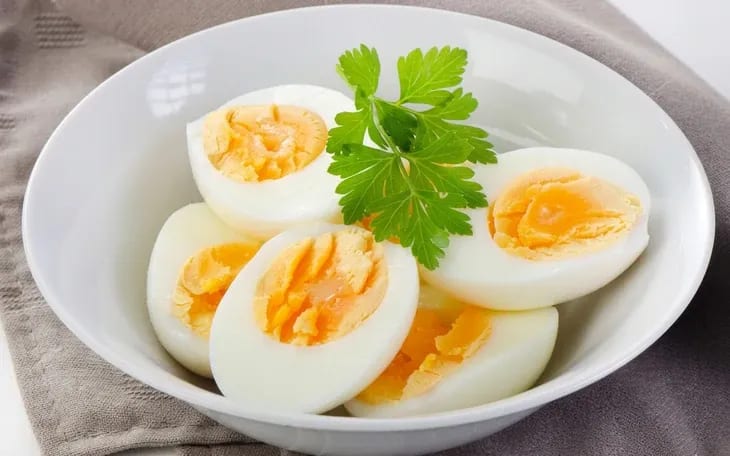
At first glance, it looks like a remarkably simple egg.
Yet, to perfect this simple egg, our product team has gone through:
- 103 days of research and development
- 37 recipe iterations
- 12 rounds of internal tastings
- 6 process adjustments
- 4 packaging options compared
- Over 300 sample eggs tested
And in the end, we selected only one final version.
Because what ANNA LALA aims to create is not just an egg that is “good enough to sell.” We want an egg that makes consumers take a bite and instantly feel: “This egg is truly something different.”
In the Beginning, We Also Thought an Egg Was Simple
Eggs are one of the most familiar foods on the planet.
Almost every family eats them. Every convenience store, mini-mart, or grocery shop can sell them.
So when we started developing this product, we thought it wouldn’t be too difficult.
Boil it, marinate it, pack it, sterilize it—and you’re good to go.
But once we genuinely dove into the R&D process, we realized:
The simpler the product, the harder it is to stand out
Because consumers are incredibly familiar with eggs.
- If the egg white is slightly too tough, they will notice immediately.
- If the yolk is a bit too dry, they will feel it right away.
- If it tastes too salty, too bland, slightly fishy, or overpowering with spices—it all gets detected instantly.
A plain egg has no complex layers of “decoration” to hide its flaws.
Whether it is delicious or not, you know it the second you take a bite.
We Scrapped the First 18 Iterations
In the early stages, we experimented with various boiling times, marination methods, and seasoning ratios.
The first 18 versions were quickly discarded.
- Some versions had egg whites that were too rubbery.
- Some had yolks so dry they left a choking, heavy sensation in the mouth.
- Some failed to let the flavor penetrate deep inside.
- Others were so intensely seasoned that they became sickeningly heavy after a few bites.
None of those versions met our standards.
The ready-to-eat egg ANNA LALA wants to make relies neither on intense saltiness nor overpowering artificial aromas to stimulate the consumer.
It must be delicious, but never excessive.
It must be flavorful, but it should never drown out the natural taste of the egg itself.
By Version 24, We Felt We Were Finally on the Right Track
When we tested the 24th iteration, for the first time, we felt:
“This is the right direction.”
- The egg white began to show a better springiness without being tough.
- The yolk retained a rich aroma and just the right amount of moisture.
- The seasoning gently infused the inside of the egg, while the overall sodium level remained strictly controlled.
Even so, we didn’t rush to finalize the product just yet.
Because a product tasting great in a controlled lab environment does not guarantee it will remain consistently stable when it hits the actual retail market.
We Focused on Perfecting 4 Core Details
1. Texture of the Egg White
The egg white must neither be too soft nor too firm.
Too soft, and the product lacks a satisfying bite. Too firm, and it gives off an artificial, industrial food vibe.
We wanted that perfect sweet spot where it offers a clean, bouncy snap upon biting, yet remains effortless to chew.
2. State of the Egg Yolk
The yolk is the absolute soul of the egg.
If the yolk is too dry, it easily triggers a choking sensation. If it is too moist, it can jeopardize the overall mouthfeel and product stability.
We continuously fine-tuned the heating intervals and cooling rhythms to strike the most comforting equilibrium.
3. Flavor Penetration
A common issue with many ready-to-eat eggs on the market is that they are intensely salty on the outside but completely bland on the inside.
A consumer might find the first bite acceptable, but once they reach the center, it feels no different from a standard hard-boiled egg.
We wanted this egg to carry flavor seamlessly from the white all the way through the yolk, without relying on a massive spike in salt.
The seasoning must seep in gradually, not just sit on the surface.
4. Packaging Stability
A ready-to-eat egg cannot just be in perfect condition while inside the factory.
It has to endure:
- Shipping and transit
- Shelf-stocking
- Cold storage
- Display handling
- And finally, arriving in the hands of the consumer.
Therefore, we tested multiple packaging structures before selecting the most resilient and optimal variant.
Selecting the Final Winner out of 37 Candidates
As we entered the final phase, we narrowed it down to 3 candidate versions.
All three tasted great and were fully qualified to be launched on the market.
Yet, we still hesitated to make the final call.
Instead, we organized multiple rounds of tasting panels involving people of different ages, occupations, and eating habits.
Some preferred a bolder taste. Some favored a more prominent aroma. Some cared deeply about the texture of the yolk. Others paid close attention to whether they could eat it daily without getting tired of it.
Ultimately, we chose the current version.
Not because it hit an extreme peak in any single metric.
But because it achieved the absolute best harmony between:
- Superior taste
- Structural texture
- Product shelf-stability
- Daily snackability
This is precisely the hardest part of food science. It is not about pushing one single metric to the absolute maximum. It is about micro-adjusting every single detail until they are all harmoniously balanced.
Why Are We So Serious About a Simple Egg?
Because we have always believed:
The Vietnamese market does not lack food options. What it lacks are people who treat food with absolute seriousness.
A single egg doesn’t carry a premium price tag. The profit margins are not necessarily massive. It is also not an easy item to spin into a complex, fancy marketing story.
But it is highly essential for daily life. It is practical. It is deeply close to the everyday life of an ordinary consumer.
- A student rushing to class in the morning can grab one.
- An office worker feeling that 3 PM slump can enjoy one.
- Drivers, retail staff, or warehouse workers can have one during a quick break.
- Fitness enthusiasts needing a quick protein boost post-workout can eat one.
No complex cooking required. No premium spending needed. Just peel and enjoy.
Simple, yet profoundly valuable.
ANNA LALA Aims to Make Food That Vietnamese Consumers Can Trust Every Single Day
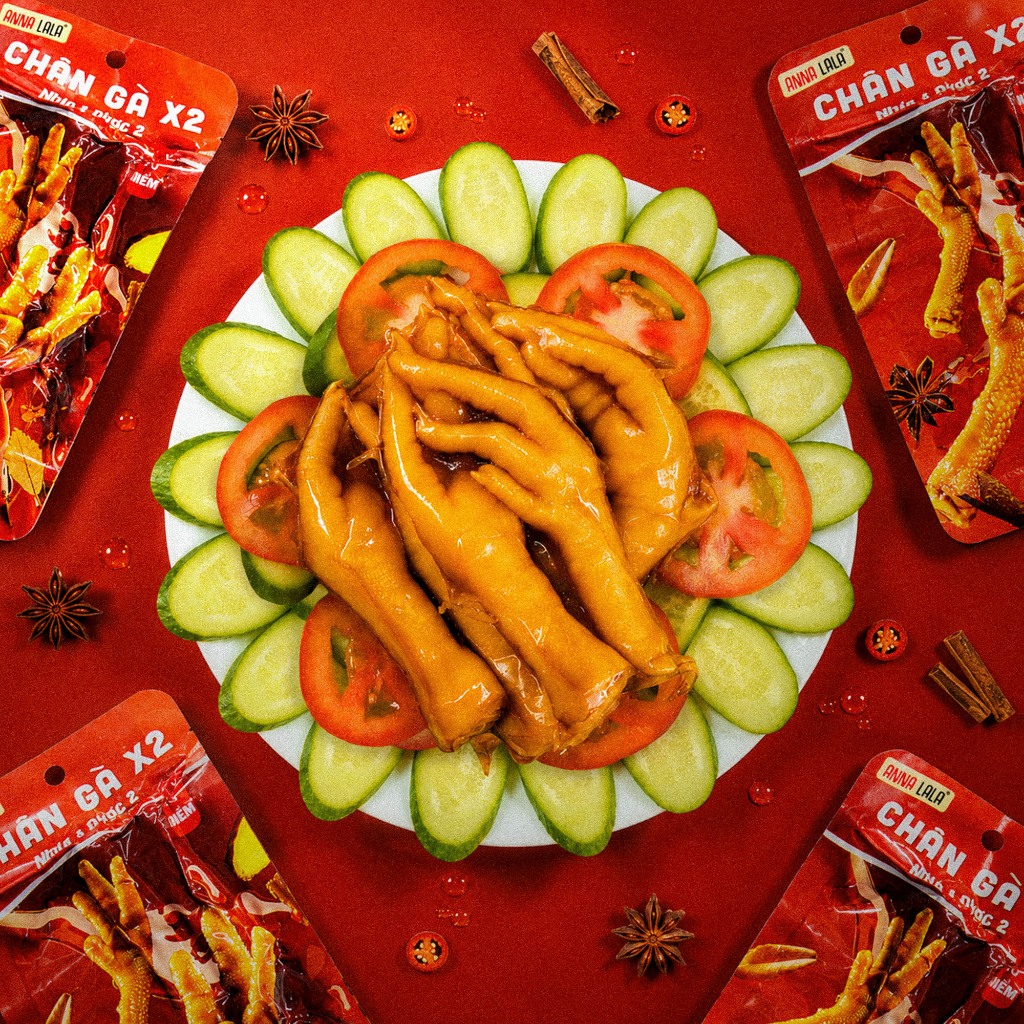
Previously, many knew ANNA LALA through our chicken feet, mini bread loaves, and mini sausages.
But we have never wanted ANNA LALA to be pigeonholed into just a few specific product categories.
We want ANNA LALA to stand for a baseline standard:
- Products must be crafted with rigorous dedication.
- Flavors must be refined through relentless iteration.
- Quality must remain rock-solid.
- Pricing must stay perfectly fair.
This time around, our ready-to-eat egg is a fresh milestone in our daily convenience food segment.
It comes with no overly complex concepts. It requires no flashy, extravagant packaging.
We simply dedicated:
- 103 days
- 37 iterations
- Over 300 sample eggs
to recreate an everyday egg from the ground up.
In the end, we delivered a version that we genuinely love eating ourselves, and one that we are completely confident in recommending to our own families and friends.
This Is the ANNA LALA Ready-to-Eat Egg
A tiny egg.
Built with absolute, uncompromised dedication.