

· Life Hacks · 4 min read
Chicken Eggs vs. Duck Eggs: Which Should You Choose for Your Child's Diet?
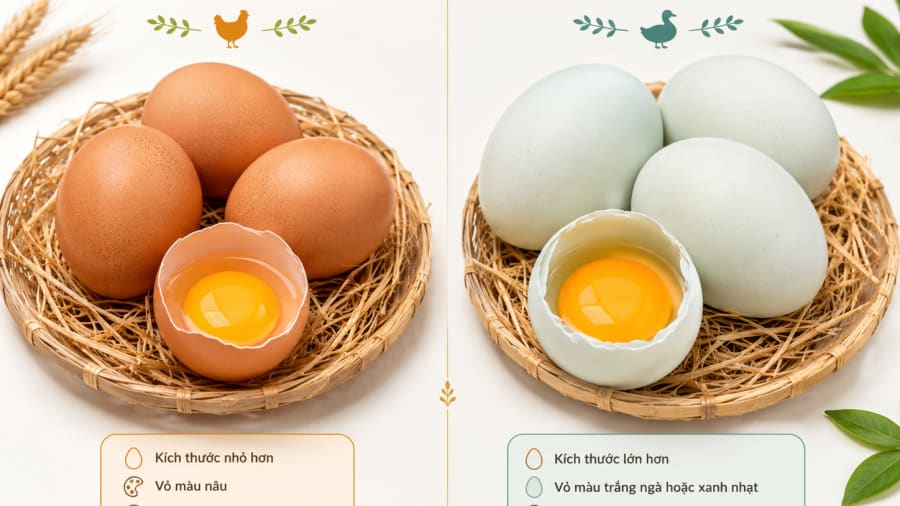
Deciding whether to feed children chicken eggs or duck eggs is a frequent dilemma for many parents. Both varieties possess distinct advantages regarding their protein content, healthy fats, and essential micronutrients.
Making the right choice depends primarily on your child’s age, digestive capability, and overall daily meal balance.
Quick Summary:
Neither egg type is universally “better” than the other. Chicken eggs are the top choice for infants starting solids (under 1 year old) due to their mild flavor, low gamey odor, and easily digestible protein. Duck eggs are richer in protein, calcium, iron, and vitamin B12, making them great for kids aged 2 and older to support height growth and brain development.
1. Nutritional Value: Chicken Eggs vs. Duck Eggs
When comparing the two types per 100 grams, there are clear differences in nutrient density:
- Protein Content: Per 100g serving, duck eggs yield around 12g of protein, slightly outpacing the 10g of protein found in chicken eggs.
- Vitamin B12 & Folate: Duck eggs boast significantly higher levels; in fact, a single duck egg can deliver over 150% of a child’s daily vitamin B12 requirement.
- Fat & Cholesterol: Duck eggs carry substantially higher fat and cholesterol levels. While one chicken egg contains roughly 92% of the daily recommended value (DV) of cholesterol, a duck egg packs up to 276%.
Therefore, despite being highly nutrient-dense, duck eggs should be consumed in controlled, moderate portions.
| Nutritional Indicator (per 100g) | Chicken Egg | Duck Egg |
|---|---|---|
| Protein | ~10g | ~12g |
| Vitamin B12 | Moderate | Exceptional (>150% DV/egg) |
| Cholesterol (relative to DV) | ~92% | ~276% |
| Flavor Profile | Mild, light, easy to eat | Richer, gamey, intense |
| Digestibility | Highly digestible | Requires a mature digestive tract |
2. Which Egg Is Best Suited for Each Age Group?
Neither egg is absolutely “superior”—the real secret lies in matching the egg type with your child’s specific stage of development:
For Infants Under 1 Year Old (Weaning Phase)
- Top Pick: Chicken Eggs.
- Why: Chicken eggs offer a mild, delicate taste with very little odor, making their protein far easier on an infant’s delicate digestive system.
- Key Benefit: The lecithin found in chicken egg yolks plays a vital role in building brain cell structures and supporting early nervous system development.
For Toddlers Aged 2+ and Adolescents
- Expanded Choice: Duck Eggs.
- Why: By this age, a child’s digestive system has fully matured. Duck eggs become an abundant source of calcium and iron, actively driving linear height growth and preventing anemia.
- Recommended Frequency: Parents should moderate consumption to around 2–3 duck eggs per week.
3. Crucial Cooking Precautions for Children
Regardless of the egg type you select, kitchen safety must always come first to safeguard your child’s health:
- Cook Thoroughly: Never offer children raw eggs, soft-boiled/runny eggs, or stir raw eggs into hot porridge. Undercooked eggs pose a severe risk of Salmonella contamination, leading to acute diarrhea and food poisoning.
- Optimize Nutrient Absorption: The protein structure in raw or partially cooked eggs is remarkably difficult for a child’s immature gut to absorb efficiently.
- Diversify the Diet: Pair eggs with fiber-rich vegetables (such as tomatoes, spinach, or pumpkin) or rotate between chicken eggs, duck eggs, and other high-protein foods (meat, fish) as recommended by the World Health Organization (WHO).
4. A 4-Step Guide to Serving Eggs Safely
| Step | Actionable Tip |
|---|---|
| 1. Choose Fresh Eggs | Purchase eggs from traceable, clean sources with intact, uncracked shells. |
| 2. Cook Completely | Hard-boil or fully scramble/steam eggs; avoid leaving yolks soft or runny. |
| 3. Portion Correctly | Serve 1/2 to 1 chicken egg per day for infants; limit to 2–3 duck eggs per week for older kids. |
| 4. Watch for Allergies | When introducing eggs for the first time (especially under age 1), start with tiny portions to monitor for potential allergic reactions. |
5. Summary
Both chicken and duck eggs are affordable, nutrient-rich “superfoods” when prepared appropriately. By picking the right egg for your child’s age group and sticking strictly to fully cooked preparations, parents can confidently nourish both physical growth and cognitive development.
References
- World Health Organization (WHO): Guiding principles for complementary feeding of the breastfed child.
- National Institute of Nutrition (Vietnam): Vietnamese Food Composition Table - Nutritional values of chicken and duck eggs.